
ATD, association for talent development

ATD Blog

Why Role Play Delivers 75% Retention (Vs. 5% From Lectures)

By

Wed Jun 18 2025

Hate Role Play? 5 Things You Can Do About It
Loading...

Brought to you by

Content

Modern sales training has a gap. Not a knowledge gap, but a performance one.

Modern sales training has a gap. Not a knowledge gap, but a performance one.

Content

Salespeople today aren’t just pitching products. They’re navigating complex conversations, adapting in real time, and building trust with increasingly discerning buyers. And while most training programs focus on delivering information, knowing what to say isn’t the same as knowing how to say it—or when, or why.

Salespeople today aren’t just pitching products. They’re navigating complex conversations, adapting in real time, and building trust with increasingly discerning buyers. And while most training programs focus on delivering information, knowing what to say isn’t the same as knowing how to say it—or when, or why.

Content

That kind of readiness only comes from active practice. That’s where role play comes in.

That kind of readiness only comes from active practice. That’s where role play comes in.

Research Shows Role Play Is Effective

Content

Role play is one of the most effective ways to prepare reps for high-stakes conversations. It gives them space to try, miss, adjust, and improve, but without risking deals. Reps can test out messaging, practice objection handling, and sharpen their instincts in a low-pressure environment.

Role play is one of the most effective ways to prepare reps for high-stakes conversations. It gives them space to try, miss, adjust, and improve, but without risking deals. Reps can test out messaging, practice objection handling, and sharpen their instincts in a low-pressure environment.

Content

The data backs it up. Retention from active practice like role play averages around 75 percent, compared to just 5 percent for lecture-style learning. Sellers who regularly role play have been shown to close more deals—research shows by as much as 20 to 45 percent.

The data backs it up. Retention from active practice like role play averages around 75 percent, compared to just 5 percent for lecture-style learning. Sellers who regularly role play have been shown to close more deals—research shows by as much as 20 to 45 percent.

Content

The impact is quantifiable. Organizations implementing structured role play programs report ramp time reductions of two to four weeks. For a team of 25 new reps, each generating $40,000 monthly when fully productive, accelerating readiness by just three weeks translates to $750,000 in additional revenue—before accounting for improved win rates and retention.
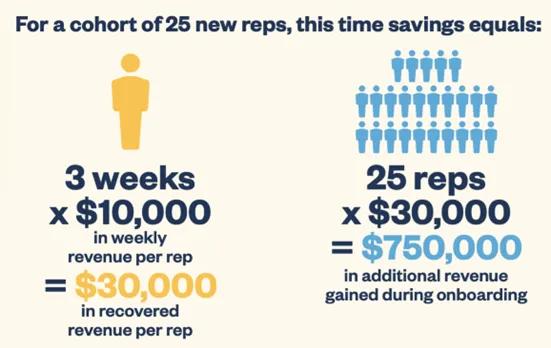
The impact is quantifiable. Organizations implementing structured role play programs report ramp time reductions of two to four weeks. For a team of 25 new reps, each generating $40,000 monthly when fully productive, accelerating readiness by just three weeks translates to $750,000 in additional revenue—before accounting for improved win rates and retention.

RolePlay Figure Noting Knowledge Retention

Content

Despite all this clear data, many sales enablement programs treat it as an optional add-on. Why?

Despite all this clear data, many sales enablement programs treat it as an optional add-on. Why?

The Challenge in Scaling Role Play

Content

Scaling role play isn’t easy. Coordinating live sessions across time zones takes time. Informal practice often lacks structure or useful feedback. Plus, many frontline managers aren’t trained as effective coaches. Without a way to track participation or outcomes, it’s hard to prove impact—or even know what’s working.

Scaling role play isn’t easy. Coordinating live sessions across time zones takes time. Informal practice often lacks structure or useful feedback. Plus, many frontline managers aren’t trained as effective coaches. Without a way to track participation or outcomes, it’s hard to prove impact—or even know what’s working.

Content

So, despite being one of the most effective training strategies, role play often goes underused, replaced by easier but less effective alternatives.

So, despite being one of the most effective training strategies, role play often goes underused, replaced by easier but less effective alternatives.

How to Incorporate Role Play Into Your Sales Enablement Training

Content

The teams getting the most from role play are building it into their overall training flow. Some are using simulations for solo practice. Others are embedding structured peer exercises into onboarding and coaching. The common thread is consistency—making role play part of the culture, not just a one-off activity.

The teams getting the most from role play are building it into their overall training flow. Some are using simulations for solo practice. Others are embedding structured peer exercises into onboarding and coaching. The common thread is consistency—making role play part of the culture, not just a one-off activity.

Content

This approach doesn’t just improve rep performance—it also gives managers and enablement leaders better insight into skills, progress, and where to focus coaching efforts.

This approach doesn’t just improve rep performance—it also gives managers and enablement leaders better insight into skills, progress, and where to focus coaching efforts.

Content

Interested in building your overall training and facilitation skills? ATD’s Training & Facilitation Certificate covers all aspects of the training cycle.

Interested in building your overall training and facilitation skills? ATD’s Training & Facilitation Certificate covers all aspects of the training cycle.

Tips for Getting Started

Content

If you’re looking to implement or improve role play, start simple. Here are a few tips to keep it effective and repeatable:

If you’re looking to implement or improve role play, start simple. Here are a few tips to keep it effective and repeatable:

  • Content

    Make it specific. Each role play should have a defined scenario, goal, and skill focus, like objection handling or pricing conversations.

    Make it specific. Each role play should have a defined scenario, goal, and skill focus, like objection handling or pricing conversations.

  • Content

    Keep it short. A 5- to 10-minute exchange is often enough to surface skill gaps and generate useful feedback.

    Keep it short. A 5- to 10-minute exchange is often enough to surface skill gaps and generate useful feedback.

  • Content

    Pair strategically. Match newer reps with more experienced ones to build confidence and enable peer coaching.

    Pair strategically. Match newer reps with more experienced ones to build confidence and enable peer coaching.

  • Content

    Provide a feedback framework. Teach reps how to give constructive, focused feedback to their peers. Use prompts like: What worked well? Where did they lose momentum? What would you try instead?

    Provide a feedback framework. Teach reps how to give constructive, focused feedback to their peers. Use prompts like: What worked well? Where did they lose momentum? What would you try instead?

  • Content

    Debrief as a group. Encourage reps to share what they learned to the wider group after the session. This helps reinforce takeaways and normalize growth through practice.

    Debrief as a group. Encourage reps to share what they learned to the wider group after the session. This helps reinforce takeaways and normalize growth through practice.

  • Content

    Use AI tools to extend learning. Let reps practice with AI-powered simulations before and after live role play. It helps them warm up, get unstuck on common challenges, and reinforce learning through repetition.

    Use AI tools to extend learning. Let reps practice with AI-powered simulations before and after live role play. It helps them warm up, get unstuck on common challenges, and reinforce learning through repetition.

  • Content

    Track outcomes. Build in ways to measure participation, improvement, and skill adoption over time. This helps refine training and connects the dots between practice and pipeline impact.

    Track outcomes. Build in ways to measure participation, improvement, and skill adoption over time. This helps refine training and connects the dots between practice and pipeline impact.

  • Content

    Involve managers early. Equip frontline managers with role play guides or rubrics so they can reinforce the same standards in coaching conversations. Their participation sends a clear message: this isn’t extra work—it’s core to performance.

    Involve managers early. Equip frontline managers with role play guides or rubrics so they can reinforce the same standards in coaching conversations. Their participation sends a clear message: this isn’t extra work—it’s core to performance.

  • Content

    Build it into the rhythm. Tie role play to weekly team meetings or coaching sessions. When it becomes a habit—not an event—reps show up better prepared and more willing to improve.

    Build it into the rhythm. Tie role play to weekly team meetings or coaching sessions. When it becomes a habit—not an event—reps show up better prepared and more willing to improve.

Content

The more consistent the effort, the more measurable the return. Reps don’t need dozens of sessions they need regular opportunities to apply what they’re learning and reflect on what’s working.

The more consistent the effort, the more measurable the return. Reps don’t need dozens of sessions they need regular opportunities to apply what they’re learning and reflect on what’s working.

Content

For more strategies about implementing role play that drives real outcomes, download the full guide here .

For more strategies about implementing role play that drives real outcomes, download the full guide here.

You've Reached ATD Member-only Content

Become an ATD member to continue

Already a member?Sign In


Copyright © 2026 ATD

ASTD changed its name to ATD to meet the growing needs of a dynamic, global profession.

Terms of UsePrivacy NoticeCookie Policy